

Voices for feline welfare
Welcome to the Catvocacy Press blog. Based in Columbia, Texas, we combine grassroots activism and educational reporting to advocate for vulnerable cats. Explore our features on TNR and colony management, rescue initiatives, community spay and neuter clinics, and adoption events—and share your own local rescue story with us at info@catvocacypress.com
Featured articles on this page-
Texas Rabies Update for Domestic Animals 2026
Why Brazoria County Needs a TNR Program
What to do when a neighbor's colony becomes a nuisance on your property
Community Cats and the Ecosystem
Community Cats and Bird Decline and Finding Solutions
Managing a Community Cat Colony
Trapping Specific Cats in a Colony
Grants for Veterinary Practices Supporting TNR Programs
The Hidden Perils of *Free to a Good Home* rehoming
Local Grassroots Advocacy

Texas domestic animal rabies update for 2026
Protecting community cat colonies, free-roaming felines, and household pets across Texas demands vigilant monitoring of public health records. While wildlife species such as bats and skunks represent the vast majority of viral reservoirs in our state, confirmed rabies cases in domestic animals—predominantly unvaccinated outdoor cats and dogs—underscore the vital role of routine vaccination during every Trap-Neuter-Return (TNR) clinic and veterinary visit.
State surveillance data collected by the Texas Department of State Health Services (DSHS) https://www.dshs.texas.gov/rabies/rabies-cases/rabies-maps/2026?utm_source=chatgpt.com#dogsandcats through 2026 highlights that feline cases consistently outpace canine domestic cases, largely due to higher rates of unvaccinated outdoor exposure. By prioritizing rabies immunization within local community cat programs and providing accessible low-cost clinics, caretakers build an essential public health barrier that protects both domestic animals and neighborhood families.
🐱 WHY TNVR IS SO IMPORTANT FOR COMMUNITY CATS IN TEXAS
🚨 Rabies is a real concern in Texas. Confirmed rabies cases in domestic animals, including cats, have been reported in Texas in 2026. This makes prevention, vaccination, and responsible community-cat management especially important.
Community cats face potential exposure to rabies through contact with infected wildlife, including raccoons, skunks, bats, and foxes.
🐾 TNVR — Trap, Neuter, Vaccinate, Return — is an important tool in protecting cats and our communities.
Here's why TNVR matters:
✅ Rabies prevention: Vaccinating community cats against rabies helps protect cats, people, and other animals.
✅ Population control: Spaying and neutering prevents unwanted litters and helps reduce the number of homeless cats over time.
✅ Healthier colonies: TNVR provides an opportunity to identify sick or injured cats and connect them with veterinary care.
✅ Safer communities: Sterilized, vaccinated cats can be monitored by colony caretakers who may notice changes in health or behavior.
✅ Humane, long-term solutions: Removing cats without addressing reproduction does not solve the ongoing problem of unsterilized cats producing more kittens.
❤️ TNVR is not just about controlling the cat population. It is also an opportunity to provide preventive veterinary care, including rabies vaccination.
Vaccination does not eliminate every risk, and TNVR alone cannot prevent all rabies exposures. Cats showing unusual behavior or suspected of having rabies should never be handled without professional guidance.
📢 Brazoria County needs accessible, affordable TNVR services!
We need collaboration among veterinary practices, animal welfare organizations, colony caretakers, volunteers, and local communities to expand spay/neuter services and rabies vaccination opportunities.
🐾 Let's work together for healthier cats, safer neighborhoods, and fewer homeless kittens!
SUPPORT TNVR. SUPPORT PREVENTION. SUPPORT COMMUNITY CATS.

Why Brazoria County needs a TNR program — and who will step up?
Across Brazoria County, municipal shelters face overwhelming intake numbers every kitten season while unmanaged community cat colonies continue to grow. Catch-and-kill policies have failed for decades; without systematic Trap-Neuter-Return (TNR), the vacuum effect ensures populations rapidly rebound. A comprehensive, county-backed TNR program saves taxpayer dollars, relieves overstressed shelter staff, and humanely stabilizes outdoor feline colonies. From grassroots caretakers to county officials, solving this crisis demands coordinated leadership, accessible low-cost spay and neuter clinics, and committed volunteers ready to step forward.
Brazoria County Needs a TNR Organization
Who Will Step Up to Build a County-Wide Community Cat Program?
Brazoria County has many dedicated cat lovers, colony caretakers, rescuers and volunteers working to help homeless and free-roaming cats. But too often, individuals are left trying to manage entire colonies on their own.
When cats aren't sterilized, colonies can grow quickly. Caretakers can become overwhelmed, and kittens continue to be born faster than the available rescue and foster resources can handle.
Brazoria County needs a coordinated Trap-Neuter-Return (TNR) program—and we're looking for an organization willing to take the lead in creating one.
🐾 What Could a Brazoria County TNR Program Offer?
A dedicated nonprofit or animal-welfare organization could develop a county-wide network providing:
-
TNR education and volunteer training
-
Humane trap lending
-
Trapping assistance
-
Transportation to veterinary appointments
-
Low-cost spay/neuter resources
-
Support for overwhelmed colony caretakers
-
Foster and rescue networking for adoptable cats and kittens
-
Community education
-
Colony information and data tracking
-
Partnerships with veterinarians, shelters, rescues and local businesses
The goal wouldn't be to replace existing rescues or shelters. It would be to connect resources and fill the gaps that currently leave individual colony caretakers struggling on their own.
🐱 We Need an Organization to Take the Lead
The biggest need right now may not simply be volunteers—it may be an organization willing to establish and manage the program.
An existing 501(c)(3) animal-welfare organization could potentially expand its mission to include a Brazoria County community-cat/TNR program.
Another possibility would be for a new grassroots TNR group to work under a fiscal sponsor while developing its own nonprofit structure.
Once an organization is established, it could pursue grants specifically designed to support community-cat programs.
💰 Grants Could Help Get the Program Started
Several funding opportunities are worth pursuing.
United Spay Alliance — Summerlee Sustainable Solutions Grant
This program is specifically designed to strengthen and expand community-cat programs. Eligible applicants can include a 501(c)(3), municipal entity, or organization working with a fiscal sponsor. Funding has typically been in the $4,000–$8,000 range, along with training, mentoring and program-development support.
United Spay Alliance — Community Cats Grant
This program provides $2,000 in matching funds to qualifying community-cat organizations that raise $2,000 through a new fundraising campaign.
Petco Love — Access to Care
Petco Love's Access to Care program specifically includes TNR, spay/neuter clinics and low-cost veterinary services among the types of programs it supports.
These opportunities demonstrate that funding exists for organizations working to develop and expand community-cat programs.
🐾 Who Will Take the First Step?
We're looking for:
A local nonprofit.
An established rescue organization.
An animal-welfare group.
A veterinarian or veterinary partnership.
Or a group of community members willing to develop a new nonprofit TNR organization.
The goal is to create a program that can eventually serve colony caretakers throughout Brazoria County, rather than leaving each individual to solve the problem alone.
If your organization would be interested in exploring this idea, please reach out.
If you're a TNR volunteer, trapper, transporter, colony caretaker, foster, veterinarian or community member who would support such a program, we want to hear from you too.
🐾 Let's Find the Organization That Will Take the Lead.
Brazoria County already has people who care about community cats.
Now we need an organization willing to bring those people together and build a sustainable TNR program

What to do when neighboring community cats become a nuisance
It can be frustrating when neighborhood or unowned cats dig in your flowerbeds, spray near doors, or disrupt your yard. Thankfully, humane and lasting solutions exist that resolve conflict without harming the animals or souring relationships with neighbors.
Understand the cause
Free-roaming cats enter yards looking for resources: food, shelter, or soft soil to use as an outdoor litter box. Knowing what attracts them is the first step toward deterring them peacefully.
When Someone Else’s Cat Colony Becomes a Nuisance on Your Property
What can you do when stray or community cats are gathering on your property, but the colony is being cared for by someone else?
Start with communication. If you know who feeds the cats, try discussing the problem respectfully and work toward a solution.
Document the concerns. Keep track of issues such as waste, property damage, or cats entering areas where they aren't welcome.
Explore humane deterrents. Motion-activated sprinklers, secure trash bins, and blocking access to hiding places can help discourage cats from gathering in unwanted areas.
Encourage TNR. Trap-Neuter-Return can help prevent the colony from continuing to grow. Connect with local animal welfare organizations for assistance.
Seek local guidance. Contact animal control or local authorities to learn about applicable ordinances and humane options.
You shouldn't have to feel helpless on your own property, and cats shouldn't have to suffer either. The goal is to find a humane, practical solution that works for everyone.
Community cats and the ecosystem
Understanding the role of free-roaming felines in our neighborhoods requires an honest look at ecological balance, rodent mitigation, and wildlife protection. Through responsible management and dedicated Trap-Neuter-Return (TNR) initiatives, caretakers help outdoor colonies coexist sustainably with surrounding native species while stabilizing local populations humanely.
Community Cats and the Ecosystem: Separating Myth from Fact
Community cats are often misunderstood, and misconceptions about their impact on the environment can lead to policies that do more harm than good. We often hear concerns from wildlife rehabilitators about the dangers free-roaming cats pose to birds and other wildlife. These concerns deserve attention, but the conversation must also include responsible colony management, prevention, and humane solutions.
Myth #1: All community cats are destroying the ecosystem.
The Fact: Cats are predators, and outdoor cats can kill birds, reptiles, and small mammals. Their impact varies depending on location, population density, prey species, and habitat. Sensitive ecosystems and endangered wildlife require particular protection. Responsible management should consider both ecological risks and the welfare of community cats.
Myth #2: Removing or killing community cats is the only solution.
The Fact: Removing cats without addressing food sources, shelter, and reproduction may allow other cats to move into the area. Humane, sustained Trap-Neuter-Return (TNR), combined with population monitoring and responsible colony management, can help reduce reproduction over time. However, TNR alone does not eliminate wildlife predation, and additional protections may be necessary in sensitive habitats.
Myth #3: Feeding community cats always makes the problem worse.
The Fact: Regular, measured feeding can help meet cats' nutritional needs and reduce their dependence on hunting for food. When combined with spaying and neutering, vaccination, sanitation, and population monitoring, feeding is part of responsible colony management. However, well-fed cats may still hunt because hunting is a natural behavior. Feeding alone cannot guarantee wildlife protection, and food should never be left out in ways that attract wildlife or create sanitation problems.
Myth #4: Community cats are the only cause of declining bird populations.
The Fact: Cats can contribute to bird mortality, but wildlife declines can also result from habitat loss, pesticide exposure, collisions with buildings and vehicles, climate change, and other environmental pressures. The relative importance of these factors varies by species and location. Effective conservation requires addressing multiple threats rather than focusing on one cause alone.
Practical Community Action Plan
Communities can protect wildlife while reducing the suffering of homeless cats by taking these practical steps:
-
Establish a TNR program. Partner with veterinarians, animal welfare organizations, volunteers, and local government to humanely trap, sterilize, vaccinate, and return eligible community cats.
-
Protect sensitive wildlife habitats. Identify nesting areas, wildlife refuges, and locations with vulnerable species. Develop humane strategies to prevent cats from accessing these areas.
-
Promote responsible pet ownership. Encourage residents to keep pet cats indoors or in secure outdoor enclosures and to spay and neuter their pets.
-
Support colony caretakers. Provide education, affordable veterinary resources, humane trapping assistance, and guidance on measured, sanitary feeding practices.
-
Monitor and measure results. Track colony populations, sterilization rates, kitten births, wildlife concerns, and new cats entering managed colonies.
-
Develop humane local policies. Encourage municipalities, wildlife advocates, residents, and animal welfare groups to collaborate on evidence-informed solutions rather than relying solely on removal or punishment.
Finding a Humane Balance
Wildlife rehabilitators play an important role in protecting injured animals, and their concerns about cat predation should be taken seriously. At the same time, colony caretakers need support and practical tools to manage community cats responsibly.
Spaying and neutering helps prevent unwanted litters, while regular feeding helps meet nutritional needs and may reduce the need to hunt for survival. Neither measure eliminates hunting entirely, so responsible colony management must also include wildlife protection and keeping cats away from sensitive habitats.
Protecting wildlife and showing compassion for community cats do not have to be opposing goals. Through cooperation, education, humane population management, and science-informed conservation, communities can work toward healthier ecosystems and less suffering for animals.
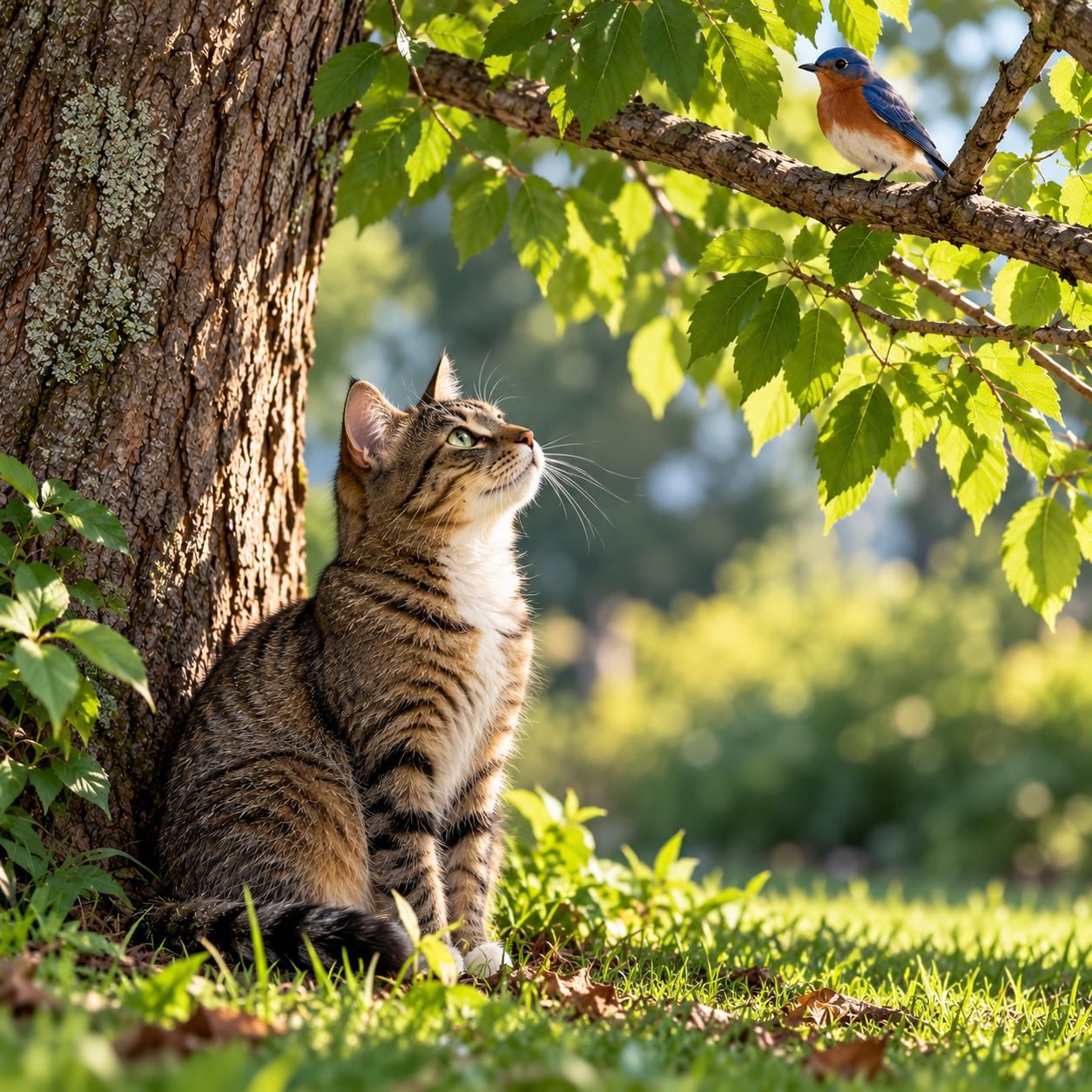
Community cats, bird decline, and finding humane solutions
A 2013 study published in Nature Communications estimated that free-ranging cats kill between 1.3 and 4 billion birds annually in the contiguous United States. These are research estimates rather than exact counts, and cat predation is only one of many complex threats facing native bird species today.
While we must take wildlife conservation seriously, euthanasia is not a practical long-term solution to the homeless cat crisis. With so many unowned cats already living across our communities, trapping and euthanizing cats on a large scale is not a realistic or sustainable population-control strategy.
A more humane, long-term approach centers on widespread spay and neuter programs, preventing abandonment, responsible pet ownership, and actively managing community cat colonies. Providing regular, measured meals to sterilized community cats may reduce their need to hunt for sustenance, though research shows feeding alone does not fully eliminate instinctive hunting behaviors. Protecting vulnerable wildlife also calls for thoughtfully keeping cat colonies away from sensitive habitats and nesting grounds.
We can care about birds and care about cats simultaneously—these conservation and welfare goals do not have to compete. What our neighborhoods need are practical, evidence-based solutions that protect wildlife while humanely resolving the root causes of feline overpopulation.
Research reference: Loss, Will & Marra, Nature Communications (2013). https://doi.org/10.1038/ncomms2380

Managing a community cat colony
Caring for outdoor colonies requires consistency, compassion, and practical routines. Establish set feeding times to monitor headcount, provide insulated waterproof shelters during extreme weather, and keep an eye out for newly arrived cats to ensure prompt TNR. Clean water and routine care keep neighborhood cats thriving safely alongside the community.
When a Community Cat Colony Becomes Overwhelming: A Step-by-Step Guide to Getting It Under Control
What to Do When You’re Overwhelmed by an Unmanaged Colony — or You Move Into a Home Where Cats Have Already Taken Up Residence
Discovering a large group of community cats on your property can be overwhelming. You may have moved into a new home and inherited a colony you didn't create, or perhaps a small colony you were caring for has grown faster than you could manage.
You may be thinking:
“Where do I even start?”
First, take a breath. You don't have to solve everything at once.
A colony that seems completely out of control can often become much more manageable through a systematic Trap-Neuter-Return (TNR) approach, consistent feeding, population monitoring, and cooperation with local resources.
The goal isn't necessarily to remove every cat. The goal is to stop reproduction, address health concerns, stabilize the population, and create a manageable situation for both the cats and the people caring for them.
1. Don't Panic — Start With an Assessment
Before trapping cats, take some time to understand what you're dealing with.
For several days, observe the colony if possible.
Make a simple list of:
-
Approximately how many cats you see
-
How many appear to be adults
-
How many are kittens
-
Which cats appear pregnant or nursing
-
Which cats appear sick or injured
-
Which cats have an ear tip
-
Which cats appear friendly or socialized
-
Where the cats are sleeping
-
Where they are being fed
-
Whether there are multiple feeding locations
-
Whether neighboring properties may also be feeding cats
Don't assume that every cat you see belongs to the same colony. Community cats may travel considerable distances, and several nearby colonies may overlap.
Take photographs when practical. A simple notebook, spreadsheet, or colony tracking system can help you keep track of individual cats.
2. Identify the Cats That Have Already Been Sterilized
Look for ear-tipped cats.
An ear tip is generally the universal visual sign that a community cat has been sterilized through a TNR program.
These cats usually don't need to be trapped again unless there is another reason they need veterinary attention.
Begin creating two basic groups:
TNR completed:
🐾 Ear-tipped cats
TNR needed:
🐾 Cats without an ear tip
If you're unsure whether a particular cat has been sterilized, don't assume. Ask a veterinarian or experienced TNR organization for guidance.
3. Prioritize Pregnant Cats, Nursing Mothers, and Kittens
If the colony is reproducing, stopping the cycle of new litters should become one of your highest priorities.
Look for:
-
Pregnant females
-
Nursing mothers
-
Young kittens
-
Juvenile cats approaching reproductive age
Never separate very young kittens from their mother simply because you found them.
If kittens are nursing, the mother should generally be part of the plan. Contact an experienced TNR/rescue organization or veterinarian for advice about the appropriate timing for trapping and sterilization.
Kittens may also have different needs depending on their age and level of socialization.
4. Contact TNR Resources Before You Start Trapping
Don't wait until you have traps full of cats to figure out where they are going.
Before trapping, contact your local:
-
TNR programs
-
Spay/neuter clinics
-
Animal shelters
-
Rescue organizations
-
Community cat organizations
-
Veterinary clinics that work with community cats
Ask about:
-
Appointment requirements
-
Walk-in availability
-
Cost
-
What services are included
-
Ear tipping
-
Vaccinations
-
Parasite treatment
-
Recovery instructions
-
Trap requirements
-
Pickup times
-
Whether pregnant cats are accepted
-
What to do with kittens
Having a plan before trapping prevents unnecessary stress for both you and the cats.
5. Work the Colony in Phases
One of the biggest mistakes overwhelmed caretakers make is trying to trap every cat at once.
Instead, divide the colony into manageable groups.
For example:
Phase 1 — High Priority
Trap:
-
Pregnant females
-
Nursing mothers when appropriate
-
Cats who are sick or injured
-
Unsterilized females
-
Cats that appear ready to reproduce
Phase 2 — Remaining Unsterilized Adults
Once the immediate reproductive priorities have been addressed, continue trapping the remaining cats that need sterilization.
Phase 3 — Juveniles and New Arrivals
Work with your TNR resources to determine when younger cats should be sterilized.
Phase 4 — Monitor
Once the majority of the colony is sterilized, continue watching for:
-
New cats
-
Abandoned pets
-
New kittens
-
Cats without ear tips
-
Injured or ill animals
This is how you transition from crisis management to colony management.
6. Establish a Consistent Feeding Routine
A predictable feeding routine can make colony management much easier.
Instead of leaving food out continuously, consider establishing designated feeding times and locations when practical.
Benefits can include:
-
Making it easier to know how many cats are present
-
Making trapping easier
-
Reducing food waste
-
Helping identify new cats
-
Discouraging wildlife from being attracted to food
-
Creating a predictable routine for the cats
Keep fresh water available.
Feed in a clean, appropriate location and remove uneaten food when practical.
If neighbors are also feeding the colony, communication can be extremely helpful. Multiple uncontrolled feeding locations can make it much harder to know how many cats are actually in the colony.
7. Create a Colony Record
You don't need an elaborate system.
A simple record can include:
Cat Description Ear-Tipped Sex TNR Date Notes Orange tabby Male No M—Friendly Gray tabby Female Yes F Unknown Returns daily Black cat Male No M—ShyPhotographs can be extremely useful.
Give cats simple identifying names based on their appearance or personality.
For example:
Orange Boy
Fluffy Gray
Little Mama
Tuxedo
White Paws
You don't need to know every cat's exact age or history to begin managing the colony.
8. Don't Automatically Assume Every Friendly Cat Is Feral
A newly inherited colony may contain a mixture of:
-
True feral cats
-
Socialized community cats
-
Stray cats
-
Abandoned pets
-
Lost pets
-
Semi-socialized cats
-
Kittens
A friendly cat may actually be someone's lost or abandoned pet.
Before deciding that a friendly cat belongs in a TNR colony, consider whether the cat could be reunited with an owner or placed through an appropriate rescue/adoption process.
Microchip scanning can also be helpful when available.
9. Address Sick and Injured Cats Separately
TNR is an important population-management tool, but it doesn't replace veterinary care.
If you see a cat that is:
-
Seriously injured
-
Having difficulty breathing
-
Unable to walk normally
-
Extremely thin or weak
-
Bleeding
-
Showing signs of severe illness
-
In obvious distress
contact a veterinarian, shelter, rescue, or experienced community-cat organization for guidance.
Don't attempt to diagnose or treat serious medical conditions yourself.
If you cannot afford veterinary care, ask local organizations whether they know of community-cat assistance programs or low-cost veterinary resources.
10. Make Your Property More Cat-Friendly and Easier to Manage
If you inherited a colony when you moved into a property, you may be tempted to immediately remove all of the cats.
Unfortunately, simply removing cats doesn't necessarily solve the underlying problem. Other unsterilized cats may move into the available territory, and the reproductive cycle can begin again.
Instead, work toward stabilizing the colony.
Consider establishing:
-
A designated feeding area
-
Fresh water
-
Weather-appropriate shelter
-
A clean area for feeding
-
A consistent feeding schedule
-
A system for monitoring newcomers
If possible, keep feeding and shelter areas away from busy roads and areas where conflicts are likely.
What If There Are Too Many Cats for One Person?
This is where networking becomes incredibly important.
You do not necessarily have to become the sole caretaker of an entire colony.
Ask for help.
Reach out to:
🐾 TNR volunteers
🐾 Colony caretakers
🐾 Local rescue organizations
🐾 Animal welfare groups
🐾 Spay/neuter programs
🐾 Friends and neighbors
🐾 Local community cat networks
You may find someone who can help with trapping while another person provides transportation and another helps with recovery.
A large colony can become much more manageable when the workload is divided.
What If You Just Moved Into a Property With an Existing Colony?
This situation is more common than many people realize.
You didn't create the colony — but now you're faced with it.
Start by documenting what is there.
Don't feel pressured to solve it in your first week.
Give yourself time to learn:
-
How many cats are present?
-
Which ones are sterilized?
-
Are there kittens?
-
Is someone already feeding them?
-
Are there neighboring colonies?
-
Are any cats sick or injured?
-
Are any friendly cats potentially lost or abandoned pets?
-
Which local TNR resources are available?
Then create a plan.
If you're renting, check your lease and communicate with your property owner or manager when appropriate. If you own the property, you can begin establishing a sustainable management routine.
The Most Important Goal: Stop the Reproductive Cycle
When a colony appears to be "out of control," it can feel like the only solution is to remove cats.
But if unsterilized cats remain, the population can continue to reproduce.
TNR changes the equation.
Every sterilized cat represents one less cat contributing to future litters.
As more cats are sterilized, the colony can gradually stabilize.
The process may take time — especially with a large, established colony — but you don't have to accomplish everything in one weekend.
Give Yourself Permission to Ask for Help
One of the most important things a colony caretaker can learn is this:
You cannot save every cat by yourself.
Feeling overwhelmed doesn't mean you've failed.
It means you may need additional resources, volunteers, transportation, funding, trapping assistance, or simply someone who understands what you're dealing with.
Break the problem into smaller pieces.
One cat. One appointment. One trap. One day at a time.
Progress may look like getting three cats sterilized this month when you originally thought you needed to fix everything immediately.
Those three cats matter.
A Simple Action Plan
If you are staring at an unmanaged colony and don't know where to begin, start here:
🐾 TODAY
☐ Count the cats you regularly see
☐ Photograph them when possible
☐ Identify ear-tipped cats
☐ Look for kittens and pregnant females
☐ Identify obvious illnesses or injuries
🐾 THIS WEEK
☐ Contact local TNR programs
☐ Find a spay/neuter resource
☐ Learn appointment requirements
☐ Establish a consistent feeding routine
☐ Begin a colony record
🐾 NEXT
☐ Prioritize unsterilized cats
☐ Begin TNR in manageable groups
☐ Address sick or injured cats
☐ Determine whether friendly cats could be lost pets
☐ Develop a plan for kittens
🐾 LONG TERM
☐ Continue monitoring for newcomers
☐ TNR new unsterilized arrivals
☐ Maintain feeding and shelter areas
☐ Keep colony records updated
☐ Build a network of people who can help
You Don't Have to Fix Everything at Once
An unmanaged colony didn't become unmanaged overnight, and it may not become manageable overnight either.
The most effective approach is usually organized, humane, and consistent.
Start with the cats in front of you.
Get the first appointments scheduled.
Trap the first few cats.
Get them sterilized.
Return them safely according to veterinary/TNR guidance.
Then do the next ones.
Eventually, what once looked like an impossible situation can become a colony you understand, monitor, and manage.
TNR isn't about giving up on community cats. It's about creating a sustainable way to care for them. 🐱❤️
Catvocacy Press provides educational information and community-cat resources. TNR procedures, recovery, veterinary treatment, and decisions about individual cats should be discussed with qualified veterinary professionals and experienced TNR organizations.

Targeted trapping for elusive colony cats
When a colony is partially fixed, trapping specific cats—such as trap-shy individuals, pregnant females, or injured felines—requires extra patience and proven techniques. Implementing targeted methods like selective feeding schedules, drop traps, and trail cameras can ensure you safely capture the precise cat that needs urgent veterinary or spay/neuter intervention.
How to Trap Specific Cats in a Community Cat Colony
Strategies for Catching the Cat You Need Without Trapping the Wrong One
TNR becomes more challenging when you are working with a colony where some cats have already been sterilized and others have not.
You may need to trap one particular female who is pregnant, a male who keeps avoiding the trap, a sick cat, or the last unsterilized cat in the colony — but every time you set a trap, the wrong cat walks right in.
If you've ever thought, “Why does the cat I don't need walk into the trap first?” — you're not alone!
Trapping specific cats requires patience, observation, and sometimes a little creativity.
The goal is to capture the intended cat safely while minimizing stress and avoiding unnecessary trapping of cats who don't need TNR.
Before You Set the Trap: Know Your Target
The first step is being absolutely certain which cat you are trying to catch.
Take a photograph if possible and document identifying characteristics such as:
-
Color
-
Coat pattern
-
Sex
-
Approximate size
-
Distinctive markings
-
Eye color
-
Tail markings
-
Ear tip status
-
Personality or behavior
-
Where the cat usually appears
Give the cat a temporary name.
For example:
Target Cat: “Little Gray”
-
Female
-
Gray tabby
-
No ear tip
-
Small notch on left ear
-
Usually arrives around 7:00 p.m.
-
Eats near the shed
-
Avoids people
-
Usually stays toward the back of the colony
The more you know about your target, the easier it becomes to develop a trapping strategy.
1. Learn the Cat's Routine
Community cats are creatures of habit.
Before attempting to trap a difficult cat, spend several days observing when and where the cat:
-
Arrives
-
Eats
-
Sleeps
-
Travels
-
Interacts with other cats
-
Enters or leaves the property
You may discover that the cat appears at almost exactly the same time every evening.
That routine can become your greatest trapping advantage.
Don't rush the process.
Sometimes several days of observation can save you from hours of unsuccessful trapping.
2. Identify the Cats You DON'T Want to Catch
This is just as important as identifying your target.
If five cats regularly eat together and only one needs TNR, you need to know what the other four look like.
Make a quick list:
Already sterilized
🐾 Orange tabby — ear-tipped
🐾 Black cat — ear-tipped
🐾 Tuxedo — ear-tipped
Still needs TNR
🐾 Gray female — target
This helps you recognize an unexpected cat immediately.
If you aren't certain whether a cat has already been sterilized, don't assume. Consult your TNR provider or veterinarian.
3. Use Feeding to Establish a Routine
A cat that is difficult to trap can sometimes be made easier to trap simply by establishing a predictable feeding routine.
Feed at approximately the same time and location each day.
Once the cats become accustomed to the routine, you can begin planning your trapping attempt around the target cat's normal arrival time.
However, avoid withholding food for prolonged periods simply to make a cat hungry enough to enter a trap.
Your goal is controlled timing, not starvation.
4. Get the Other Cats Used to the Trap
One of the most useful techniques for difficult cats is trap acclimation.
Instead of immediately setting the trap to catch the cat, place the trap in the feeding area with the door secured open so it cannot accidentally close.
Allow the cats to investigate it.
You can gradually place food closer to and eventually inside the trap.
The idea is to make the trap seem like an ordinary part of the feeding environment rather than something frightening.
This can be especially helpful with cats who have previously been trapped.
Never leave an unsecured trap where a cat could become trapped accidentally.
5. Separate the Target When Possible
If your target cat tends to eat separately from the others, take advantage of that behavior.
For example, if the colony normally eats in several areas, you may be able to:
-
Identify the target's preferred feeding location
-
Place the trap there
-
Position yourself where you can observe
-
Keep other cats away from that area when practical
Some cats naturally hang back until the other cats have finished eating.
That behavior can actually work in your favor.
6. Use a Trap With the Right Placement
Trap placement can make a huge difference.
Position the trap:
-
On level ground
-
In an area the cat already frequents
-
Away from excessive noise
-
Away from heavy foot traffic
-
Where you can monitor it
Whenever possible, avoid placing the trap in a location where a trapped cat could be exposed to extreme heat, cold, rain, predators, or other hazards.
Never leave a set trap unattended for extended periods.
A trapped cat is vulnerable and should be monitored closely.
7. Make the Trap More Appealing
Food is usually the primary lure.
Strong-smelling wet food can be particularly effective.
Depending on the cat and your TNR program's instructions, you may use a small amount of food leading toward the back of the trap, with the main food reward positioned beyond the trip plate.
The goal is to encourage the cat to walk completely inside.
Avoid placing so much food in the trap that the cat can eat without stepping far enough inside to trigger it.
8. Don't Overload the Trap With Food
More food doesn't necessarily mean a better trap.
A small, highly appealing food reward is often sufficient.
If you're working with a cat that has become trap-shy, changing the food lure may sometimes help.
Possible options include strong-smelling wet cat food or another food that the cat already finds irresistible.
Use only foods that are safe for cats and appropriate for the situation.
9. Cover the Trap After a Cat Is Caught
Once the correct cat is safely trapped, cover the trap with a towel or blanket while leaving adequate ventilation.
A covering can help reduce visual stimulation and may help the cat settle.
However, make sure:
-
Airflow is not blocked
-
The covering isn't too heavy
-
The trap remains secure
-
The cat is kept at an appropriate temperature
Do not leave a trapped cat sitting in direct sun or extreme temperatures.
10. What If the Wrong Cat Gets Caught?
This is one of the most common problems in colony trapping.
If an already-ear-tipped cat enters the trap:
Don't panic.
Follow your TNR program's instructions for safely releasing the cat.
If the cat is calm and the situation is safe, release the cat according to the program's guidance and reset your plan.
You may need to:
-
Change the trap location
-
Change the timing
-
Modify the food placement
-
Allow the cats to become comfortable with the trap again
-
Temporarily focus on another cat
Sometimes the wrong cat being caught provides useful information about the colony's behavior.
11. The “Trap-Happy” Cat
Every colony seems to have one.
This is the cat who dives into the trap before you've even finished setting it up.
If that cat repeatedly steals your target's food, you may need to change your strategy.
Depending on the situation, you can work with your TNR provider to determine whether:
-
The trap-happy cat should be scheduled for TNR first
-
Feeding locations should be changed
-
A separate feeding routine can be established
-
A different trap strategy should be used
Sometimes trapping the easy cat first is the best way to clear the way for the difficult cat.
12. The Trap-Shy Cat
Some cats seem to know exactly what a trap is.
They may:
-
Refuse to approach it
-
Eat around it
-
Watch other cats enter
-
Wait until the trap is removed
-
Become frightened after one failed attempt
Don't repeatedly chase the cat around with a trap.
That can make the situation worse.
Instead, stop and reset.
Give the cat time to become comfortable around the trap again.
You may need several days of trap acclimation before attempting another capture.
13. The Cat Who Eats Beside the Trap
This can be incredibly frustrating.
The cat walks up to the trap, eats the food outside it, and leaves.
Try making the trap part of the cat's normal feeding environment.
Start with food near the entrance.
Then gradually move the food farther inside over multiple feeding sessions.
Once the cat is comfortably eating inside the trap, you can work toward a properly timed capture.
Patience is often more effective than repeatedly attempting to force a capture.
14. The Cat Who Will Only Eat When You're Gone
Some community cats are extremely cautious around humans.
If your TNR program permits it, you may need to position yourself where you can safely monitor the trap without being immediately visible to the cat.
However, do not abandon a set trap and leave it unattended.
The trap should remain under appropriate observation so that the cat isn't left confined unnecessarily.
15. Use a Camera If You Keep Missing the Cat
A simple outdoor camera can sometimes answer questions that hours of watching cannot.
You may discover:
-
The cat arrives at 2 a.m.
-
Another cat is eating the food first
-
The target approaches but leaves when you move
-
The target is visiting another feeding location
-
The cat only appears on certain days
Knowing exactly when your target arrives can dramatically improve your chances.
16. Be Especially Careful With Nursing Mothers
If you're trying to trap a female who may be nursing, locate the kittens before removing her from the colony for an extended period.
Very young kittens can depend entirely on their mother.
If you believe a trapped female is nursing:
Contact your TNR provider or an experienced rescue organization for guidance before proceeding.
The goal is to protect both the mother and her kittens.
17. Never Use Unsafe Methods to Catch a Cat
TNR should always be humane.
Never attempt to catch a community cat by:
-
Chasing it into a corner
-
Grabbing it with your hands
-
Using improvised snares
-
Using dangerous restraints
-
Using tranquilizers without veterinary direction
-
Using harmful substances
-
Setting traps in unsafe locations
A frightened cat can bite or scratch, and attempting to physically restrain a feral or frightened cat can cause serious injury to both the cat and the person.
Use appropriate humane trapping equipment and seek assistance from experienced TNR volunteers when necessary.
18. Know When to Ask for Help
Some cats are simply difficult to trap.
If you've tried repeatedly without success, don't assume you have failed.
Ask an experienced TNR trapper for help.
Experienced trappers may have access to specialized equipment and techniques for particularly difficult cats.
Some situations may require a drop trap or another humane trapping method rather than a standard box trap.
Specialized equipment should be used by people who understand how to operate it safely.
A Simple Strategy for the “One Cat Left” Problem
When you've sterilized nearly the entire colony and one cat remains, use a methodical approach.
Step 1
Photograph and identify the cat.
Step 2
Observe its routine.
Step 3
Identify where it eats.
Step 4
Confirm which other cats are already sterilized.
Step 5
Establish a consistent feeding schedule.
Step 6
Introduce the trap without setting it.
Step 7
Gradually move food farther into the trap.
Step 8
Plan your trapping attempt around the cat's routine.
Step 9
Monitor the trap closely.
Step 10
Once captured, cover the trap and follow your TNR provider's instructions for transport and veterinary care.
Remember: Patience Is Part of TNR
Trapping a specific cat can take much longer than trapping a colony of cats who are unfamiliar with traps.
That's okay.
The objective isn't to win a battle with the cat.
The objective is to safely get the cat into veterinary care.
If the cat doesn't cooperate today, try again tomorrow.
If the strategy isn't working, change the strategy.
If you need help, ask for help.
And if you accidentally trap the wrong cat, learn from what happened and adjust your plan.
One difficult cat can still be worth the effort.
That last unsterilized female could be responsible for multiple future litters. That one unsterilized male could continue contributing to the colony's population.
Getting even one more cat sterilized is progress.
🐾 Trap patiently.
Trap humanely.
Trap strategically.
And never be afraid to ask for help.
Important Safety Reminder
TNR techniques can vary depending on the cat, colony, weather, veterinary program, and individual circumstances. Always follow the instructions provided by your veterinarian or TNR organization. Trapped cats should be monitored appropriately and transported according to veterinary/TNR guidance. Never leave a trapped cat exposed to dangerous temperatures or other hazards.
Catvocacy Press provides educational information and community-cat resources. This article is not a substitute for veterinary advice or hands-on instruction from an experienced TNR professional.
For further reading https://www.alleycat.org/tips-for-hard-to-trap-cats
Grants for veterinary practices supporting TNR programs
Veterinary clinics play an indispensable role in humane feline population control. By tapping into dedicated grant programs—such as Petco Love Access to Care, the Summerlee Sustainable Solutions Grant via United Spay Alliance, and community foundation subsidies—private practices and veterinary teams can offset the surgical, vaccination, and ear-tipping costs needed to establish high-impact Trap-Neuter-Return (TNR) partnerships in our communities.
A veterinary practice in Texas can obtain grants to operate a Trap-Neuter-Return (TNR) program for community cats. Funding can help cover spay/neuter surgeries, rabies vaccinations, ear tipping, medical supplies, and sometimes transportation or other program expenses.
For a veterinary clinic in Brazoria County, one of the most promising approaches is to partner with a nonprofit cat rescue or animal welfare organization and apply for grants together.
1. How a veterinary practice can qualify for grants
There are three main ways to structure a grant-funded TNR program.
Partner with a 501(c)(3) nonprofit
The nonprofit applies for grants, coordinates trapping and volunteers, and pays the veterinary clinic for approved services. This often opens the widest range of grant opportunities.
Some funding programs accept veterinary providers or businesses, although many animal welfare foundations restrict grants to nonprofits or government agencies.
A municipality or animal services department may be able to obtain funding or contract with a veterinary clinic to provide sterilization services for community cats.
A clinic does not necessarily have to become a nonprofit itself. In fact, keeping the veterinary practice separate from a nonprofit partner is often simpler.
2. Grant programs worth pursuing
These are some of the strongest starting points for a Brazoria County veterinary practice.
United Spay Alliance — Community Cats Grants
Offers a $2,000 matching grant after the recipient raises $2,000 through a new fundraiser. Targets grassroots TNR groups, rescue organizations, and low-cost spay/neuter providers. Its ideal applicant is an established nonprofit with an active TNR program.
The published application deadlines are March 31 and August 31 each year.
United Spay Alliance — Summerlee Sustainable Solutions Grants
Typically awards $4,000–$8,000 for expanding community cat programs, with training and mentorship. Eligible applicants include nonprofits, municipal entities, and organizations with fiscal sponsors.
The next application cycle has not yet been announced.
Petco Love — Access to Care Grants
Specifically includes spay/neuter clinics, low-cost veterinary providers, and TNR programs. The September 1–30, 2026 application window has just passed, but this is worth watching for future opportunities.
Texas Department of State Health Services — Animal Friendly Grants
Texas offers grants for low-cost sterilization through qualifying shelters, charities, and nonprofit veterinary medical associations.
A regular for-profit veterinary clinic is not among the listed direct applicants. Also, because the program focuses on animals owned by the public, a community-cat-only project should confirm eligibility before applying.
Email The.Vet@dshs.texas.gov to request notification of the next funding round.
3. What a grant proposal should include
A veterinary clinic and its nonprofit partner should prepare:
-
A description of the community cat overpopulation problem in Brazoria County.
-
A target number of cats to sterilize each month or year.
-
A veterinary service agreement showing discounted TNR costs.
-
A plan for trapping, transportation, recovery, and return.
-
A budget identifying exactly how the grant money will be spent.
-
A tracking system documenting sterilizations, vaccinations, locations served, and results.
-
A plan for continuing the program after grant funding ends.
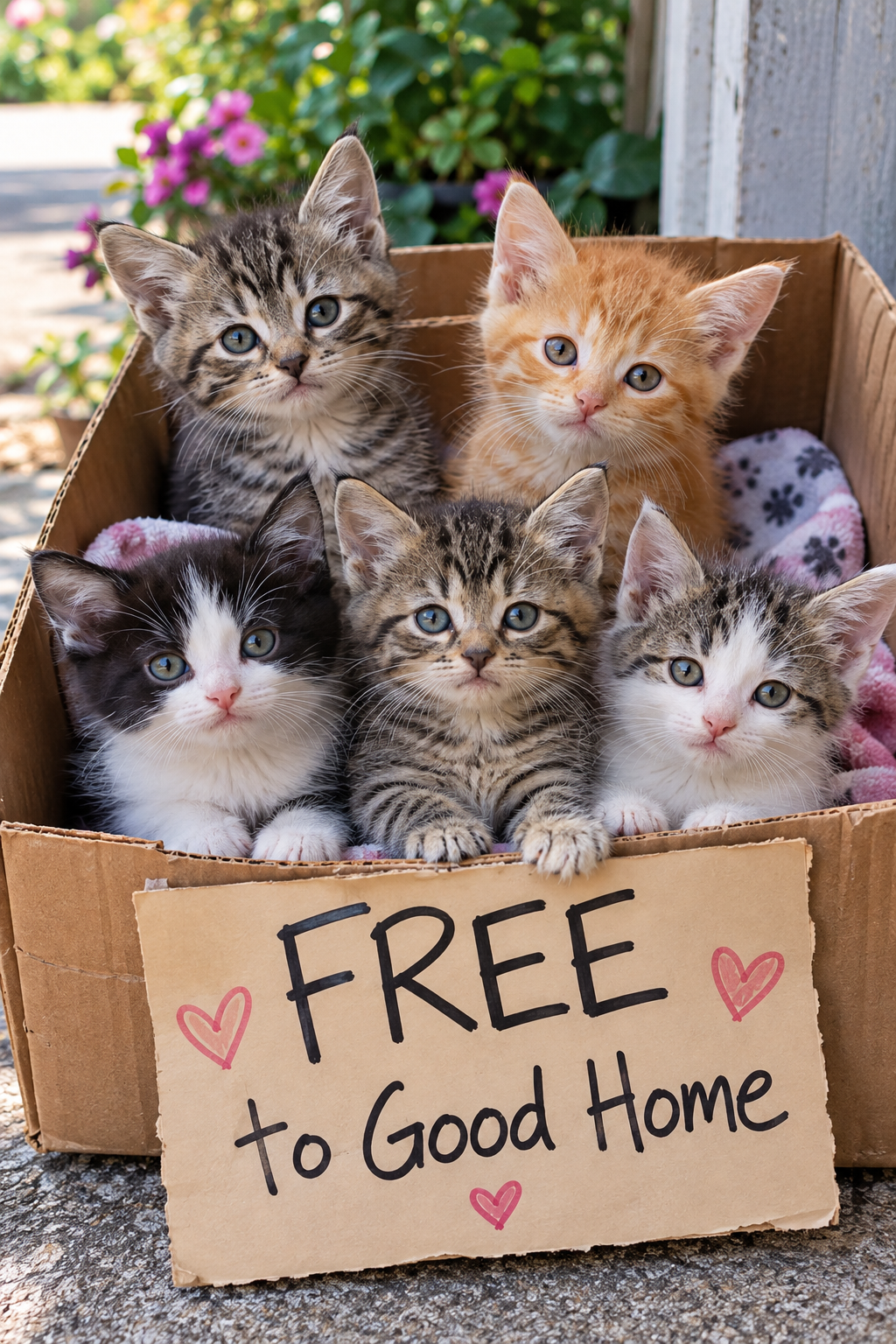
The hidden perils of "free to good home" rehoming
When life circumstances force people to find a new home for a feline companion or an unexpected litter, advertising cats and kittens as “free to a good home” often feels like the fastest, kindest route. In reality, offering animals at zero cost exposes them to grave dangers that well-meaning pet owners rarely anticipate.
The Hidden Risks of Giving Kittens Away for Free
Why “Free to a Good Home” Can Put Vulnerable Kittens at Risk
When someone finds a litter of kittens, one of the first thoughts may be, “I just need to find them homes.” Posting “Free kittens” on social media or classified sites can seem like the fastest solution.
Unfortunately, the person offering the kitten may know very little about the person responding.
A friendly message, a convincing story, or a promise that the kitten will have a wonderful home does not necessarily mean that the animal will be safe.
Kittens Are Vulnerable Because They Are Free
When there is no adoption process, screening, or fee, virtually anyone may be able to obtain a kitten.
While most people who respond may genuinely want a pet, there are also situations in which animals can be acquired for purposes that have nothing to do with providing them a loving home.
Kittens and young cats can potentially be:
- Used as live or dead prey for exotic pets, including large snakes and other predators.
- Obtained as bait or animals used in cruel activities.
- Acquired by people involved in animal abuse or illegal dog-fighting activities.
- Used as targets for cruelty or intentionally harmed.
- Resold to another person without the original caregiver knowing.
- Passed from person to person until their whereabouts are unknown.
- Taken by individuals who simply want an animal but are unwilling or unable to provide proper veterinary care.
- Used for breeding by people looking to make money from animals rather than responsibly caring for them.
There have also been reports and warnings within animal-welfare communities about people acquiring kittens for disturbing purposes, including altering their appearance with paint or other substances. Regardless of how frequently any particular scenario occurs, the larger lesson is the same: you cannot determine someone's intentions simply because they respond to a free-kitten advertisement.
“But They Seem Really Nice”
This is one of the hardest parts for rescuers to accept.
Someone can sound compassionate over the phone or through Facebook Messenger and still not be an appropriate adopter.
That is why responsible placement should involve more than simply asking:
“Do you want a kitten?”
Instead, consider asking:
- Have you owned cats before?
- Do you currently have other animals?
- Are your pets vaccinated and altered?
- Will the kitten live indoors?
- Are you prepared for veterinary expenses?
- Do you have permission to have pets where you live?
- Who will be responsible for the kitten's care?
- Are you willing to have the kitten spayed or neutered?
- Can you provide references if requested?
- Are you willing to stay in contact after adoption?
Don't Give Kittens Away at Public Locations
Meeting a stranger in a parking lot or other public location and handing over a kitten without knowing anything about the person can make it extremely difficult to protect that animal.
Instead, consider working with:
✔ A reputable rescue organization
✔ An established foster network
✔ A veterinary clinic or TNR organization
✔ A carefully screened adopter
✔ A trusted animal-welfare organization
A responsible rescue or foster network can help with screening, veterinary care, sterilization, adoption contracts, and follow-up.
Consider an Adoption Fee
A modest, reasonable adoption fee can discourage some people who are looking for animals simply because they are free.
However, a fee is not a guarantee of safety. Someone willing to pay money can still be an unsuitable adopter.
The most important protection is screening and responsible placement, not the amount of money charged.
Never Let Someone Pressure You
Be cautious if a potential adopter:
- Wants the kitten immediately.
- Refuses to answer basic questions.
- Becomes angry about screening.
- Doesn't want to provide any information.
- Wants multiple kittens for unexplained reasons.
- Gives inconsistent information.
- Insists that you meet somewhere unusual.
- Doesn't want you to know where the kitten will live.
- Objects to sterilization or veterinary care.
- Says, “It's just a free kitten—why are you asking so many questions?”
A legitimate adopter should understand why you are trying to protect the animal.
The Safest Goal Isn't Just Finding a Home
It's finding the right home.
When you rescue a kitten, you become that animal's advocate. You may be the only person standing between a vulnerable animal and an unsafe situation.
Don't feel guilty for saying no to an adopter who doesn't pass your screening.
Don't rush because someone says they can take the kitten today.
And don't assume that giving an animal away for free automatically means you are helping it.
Before You Post “Free Kittens”
Ask yourself:
Can I safely screen the person who wants this kitten?
If the answer is no, consider contacting a reputable rescue, foster organization, TNR group, or animal-welfare organization for assistance.
A kitten's life shouldn't depend on who happens to answer a classified ad first.
Free should never mean unprotected.
This article is intended as an animal-welfare awareness resource. Specific risks vary by location and circumstance, and suspected animal cruelty or illegal animal fighting should be reported to the appropriate local authorities rather than confronted personally.

Local grassroots advocacy
🐱 “Cats, cats, cats. That’s all she talks about!”
Are cats more important than people, dogs, or wildlife?
Well, to me, each is uniquely important for different reasons, and yet we are all connected.
I believe we are called to fill in the gaps where the world has needs that are going unmet. We all have a purpose, but those purposes look different for each of us.
My passion for cat advocacy comes from seeing what happens when a crisis goes unaddressed for so long that it grows beyond the critical stage. By then, the problem can feel overwhelming.
People often talk about outdoor cats killing birds and other small animals, and that is a legitimate concern. But what we don't talk about enough is how outdoor cats are also victims of larger predators, including coyotes and other wildlife. They face dangers from traffic, disease, harsh weather, and other threats just trying to survive.
Ideally, every cat would have a safe, loving home. I wish that were our reality, but with so many homeless cats already out there, it can feel like an unattainable dream.
So, what can we do with the reality we have today?
🐾 Support TNR (Trap-Neuter-Return) to humanely manage community cat populations.
🏠 Provide safe, predator-resistant shelters for cats living outdoors.
💧 Ensure they have access to clean water and food.
❤️ Work together to prevent more cats from being born into homelessness and help those who can be placed in loving homes.
This isn't about choosing cats over people, dogs, or wildlife. It's about recognizing a need and doing what we can to make a difference.
We can't solve every problem in the world, and we can't all dedicate ourselves to every cause. But we can each find where our hearts, abilities, and efforts can serve a purpose.
Compassion isn't a competition. We can care about wildlife, protect birds, love our dogs, support people in need, and still advocate for homeless cats.
My heart has been drawn to cat advocacy because I see a need, and I want to be part of the solution rather than simply watch the problem grow.
🐾 We may not be able to save them all, but we can make a difference for the ones we reach.

Accessible spay and neuter events
The key to ending feline homelessness starts with proactive population management. We investigate upcoming mobile clinic schedules, low-cost spay and neuter campaigns, and trap-neuter-return (TNR) drives in our region. Discover how accessible veterinary care protects outdoor colonies, preserves shelter resources, and creates healthier neighborhoods for community cats.

Community adoption events and forever homes
Connecting community members with adoptable felines requires persistent outreach and organized local events. We highlight regional adoption weekends, foster network mixers, and creative adoption campaigns designed to place senior cats and bonded pairs into loving families. Read about recent adoption successes, pass along the post to prospective adopters, and help every cat find a safe home.