

Feline facts
Explore essential visual guides, charts, and practical facts about cat welfare, colony management, and newborn kitten care across Texas. If you have personal insights or an inspiring experience to share, we invite you to submit your expertise to Pamela at pamela.urban777@gmail.com.
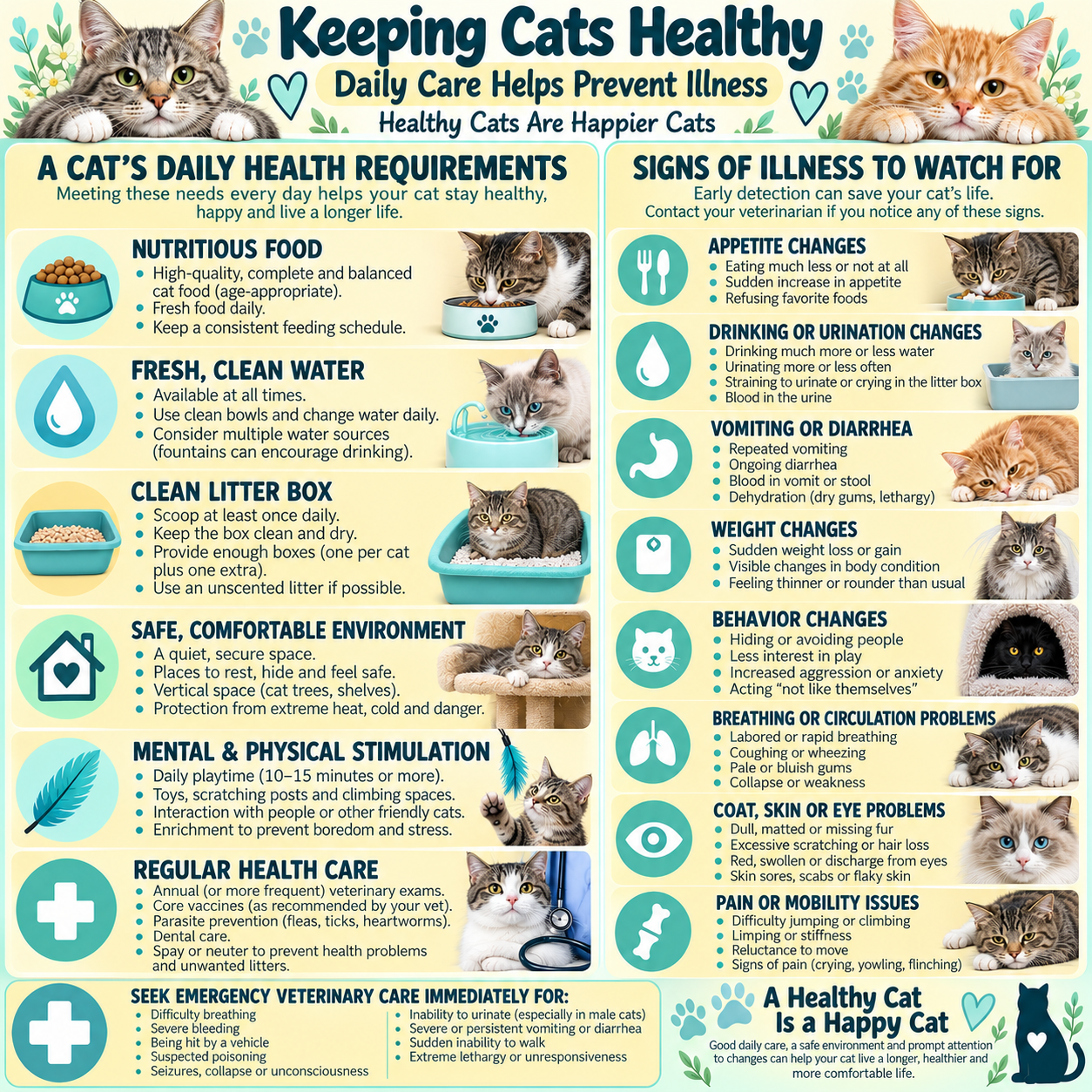
Essential daily cat care and health tips
Understanding feline nutrition, hydration, and regular wellness routines keeps domestic companions thriving. Consistent preventative care and early symptom recognition drastically improve long-term well-being.
🐾 Cat Care Tips
🥣 Nutrition Matters
Feed your cat a complete and balanced diet appropriate for their age and life stage. Avoid sudden food changes, and always provide access to fresh, clean water.
💧 Keep Them Hydrated
Cats can be naturally low drinkers, so encourage hydration by providing multiple water sources or a pet water fountain. Wet food can also help increase daily water intake.
🩺 Know Your Cat’s Normal
Pay attention to your cat’s usual eating, drinking, litter box habits, activity level, grooming, and behavior. Knowing what is normal makes it easier to recognize when something has changed.
👀 Watch for Warning Signs
Changes such as hiding, loss of appetite, vomiting, diarrhea, unusual thirst, difficulty breathing, sudden weight loss, changes in urination, or extreme lethargy may indicate a health problem. When something seems wrong, contact a veterinarian promptly.
🦷 Don’t Forget Dental Health
Dental disease is common in cats and can cause pain and other health problems. Regular veterinary dental examinations and appropriate home dental care can help protect your cat’s teeth and gums.
🐾 Preventive Care Saves Lives
Routine veterinary examinations, vaccinations, parasite prevention, spay/neuter services, and age-appropriate health screenings can help prevent problems or identify them before they become serious.
🧶 Enrichment Is Wellness
Cats need more than food and shelter. Provide safe places to climb, scratch, hide, rest, and play. Interactive toys and daily playtime help support both physical and mental well-being.
❤️ Trust Your Instincts
You know your cat better than anyone. If your companion suddenly seems different or something simply doesn't feel right, don't ignore it. Early recognition and veterinary care can make a meaningful difference.
A healthy cat is a happy cat—and informed caregivers are one of their greatest advocates. 🐱
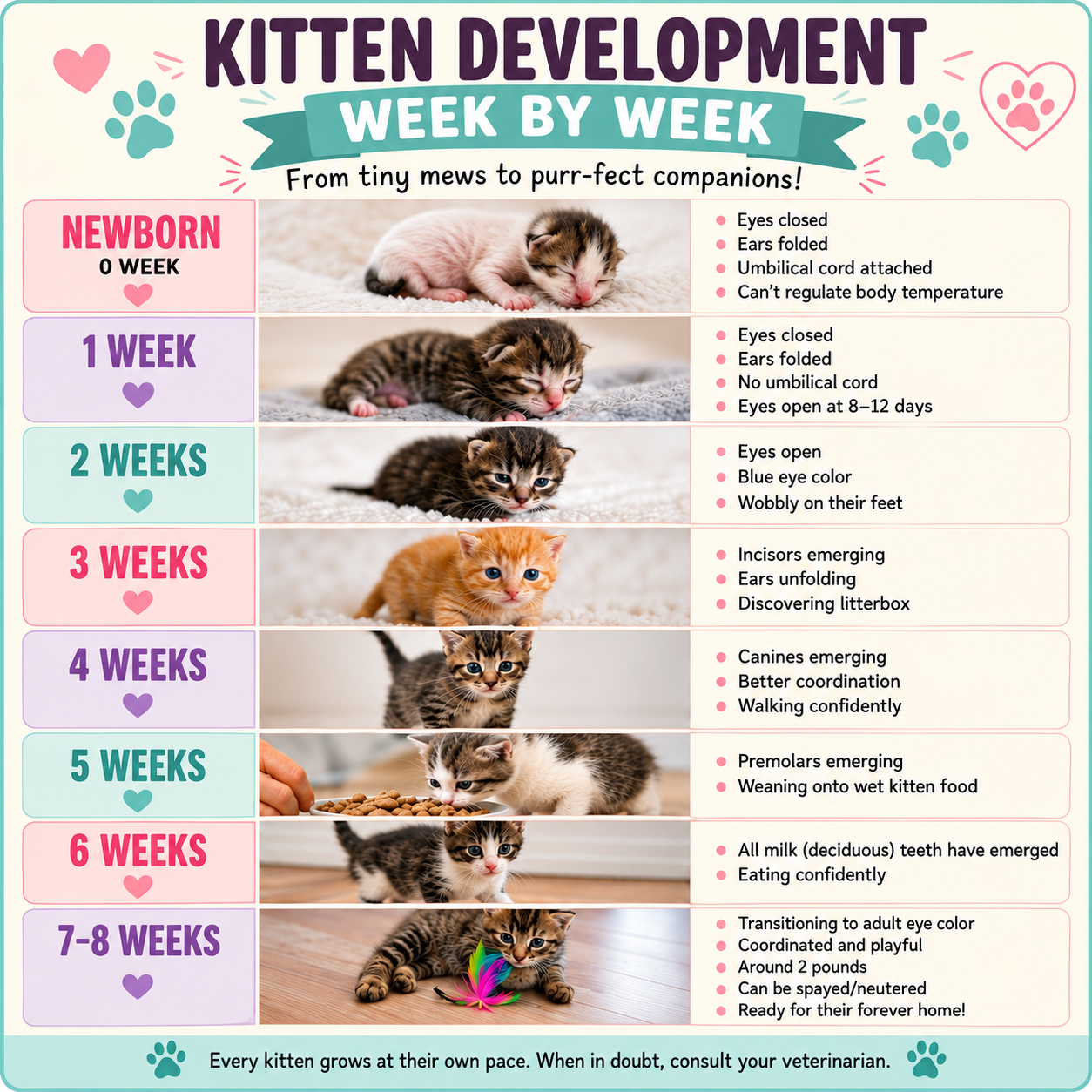
Critical milestones in neonatal kitten care
Newborn and orphaned kittens require precise temperature regulation, scheduled feeding routines, and dedicated monitoring. Proper weight tracking charts and feeding guidelines are vital for their early survival.
🐱 Kitten Development Milestones
🍼 Birth–1 Week
- Eyes remain closed.
- Ears are folded.
- Mostly sleeps and nurses.
- Depends completely on mom or a caregiver for warmth and feeding.
- Needs help eliminating if orphaned.
- Begins gaining weight steadily.
👀 1–2 Weeks
- Eyes begin opening, usually around 7–14 days.
- Ears begin unfolding.
- Becomes more alert and responsive.
- Starts crawling and moving around the nest.
- Still requires warmth and frequent feeding.
- Continues needing assistance with elimination if not yet able to go independently.
🐾 2–3 Weeks
- Begins standing and taking wobbly steps.
- Becomes increasingly curious and active.
- Baby teeth begin emerging.
- Starts interacting more with littermates and caregivers.
- Begins learning basic coordination.
- May begin showing interest in a litter box.
🧸 3–4 Weeks
- Walking and exploring become easier.
- Begins playing with littermates and toys.
- Starts developing social behaviors.
- Can begin learning to use a shallow litter box.
- May begin transitioning toward wet kitten food.
- Still benefits from kitten milk replacer if being bottle-fed.
🍽️ 4–6 Weeks
- Becomes much more active and playful.
- Develops better balance and coordination.
- Increasingly uses the litter box.
- Begins eating more kitten food as weaning progresses.
- Learns through play, exploration, and interaction with people and other appropriate animals.
- Continue gentle, positive socialization.
🐱 6–8 Weeks
- Usually eating kitten food independently.
- Uses the litter box reliably.
- Runs, climbs, pounces, and plays.
- Develops stronger social and hunting behaviors through play.
- Becomes more independent from mom.
- Continued positive human handling helps build confidence.
❤️ 8–12 Weeks
- Rapid physical and social development continues.
- Comfortable with normal household sounds and routines when introduced appropriately.
- Increasingly confident exploring new environments.
- Continues learning appropriate play and social boundaries.
- Veterinary care, vaccinations, parasite prevention, and spay/neuter planning become important.
🌱 Remember
Every kitten develops at its own pace. Premature, orphaned, sick, or underweight kittens may reach milestones later. If a kitten isn't gaining weight, stops eating, seems unusually weak, has difficulty breathing, or suddenly stops progressing, contact a veterinarian or experienced neonatal-kitten caregiver promptly.
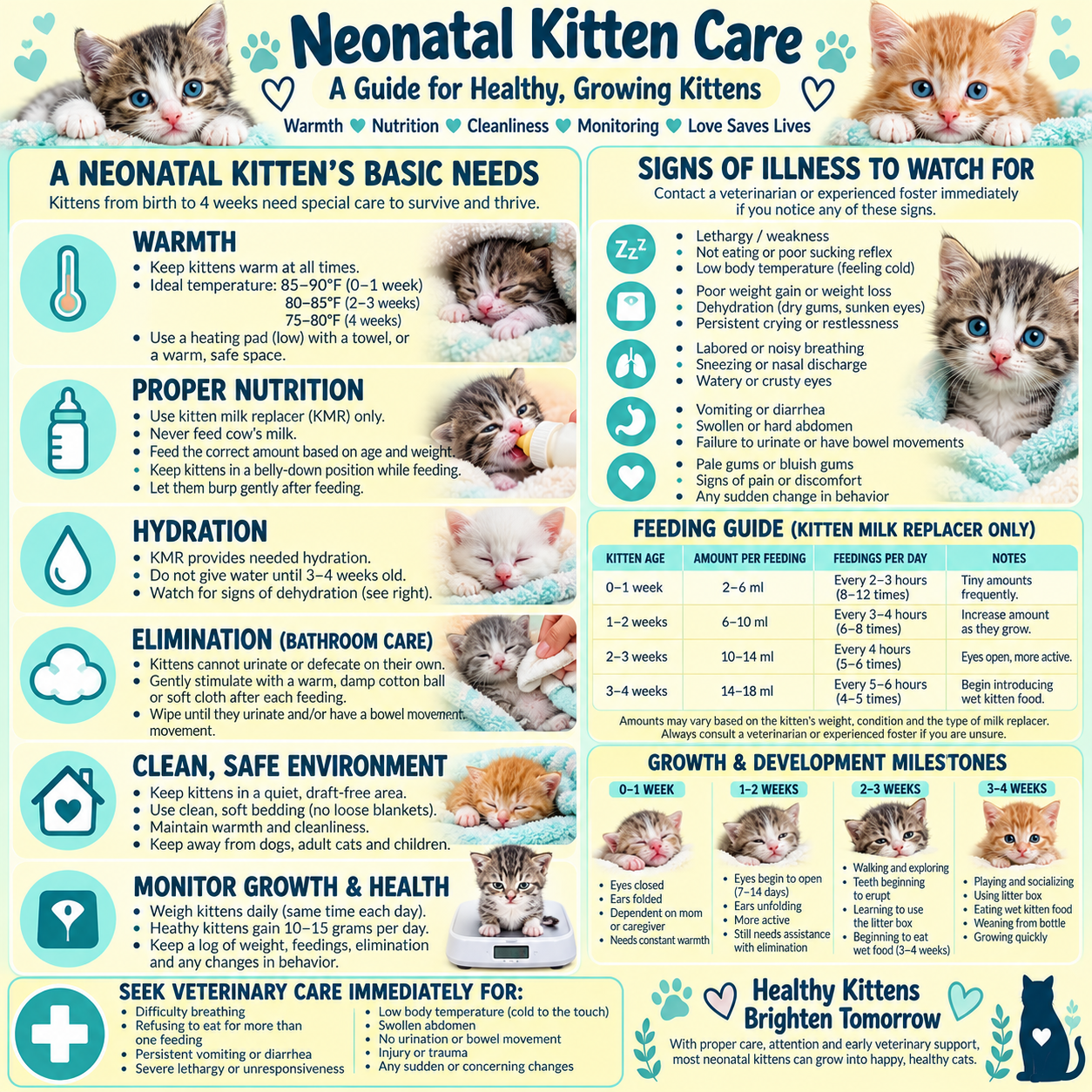
Practical tips for raising healthy kittens
From creating a safe nursery space to understanding socialization stages, proper early care shapes confident and healthy adult cats. Keep kittens warm, introduce age-appropriate nutrition steadily, and monitor weight daily during their formative weeks.
🐱 Kitten Care Tips
- Keep newborn kittens warm. Young kittens cannot regulate their body temperature well, so provide a warm, draft-free nesting area.
- Use kitten milk replacer when needed. Never give newborn kittens cow's milk; use a commercial kitten milk replacer according to veterinary or product guidance.
- Feed kittens according to age and weight. Newborns need frequent small feedings, while their nutritional needs change rapidly as they grow.
- Never feed a cold kitten. Warm the kitten first and seek veterinary guidance if the kitten is cold, weak, or unable to nurse.
- Feed safely. Keep bottle-fed kittens in a natural belly-down position—never on their backs—to reduce the risk of aspiration.
- Help very young kittens eliminate. Kittens generally need gentle stimulation with a warm, damp cotton ball or soft cloth after feeding until they can eliminate on their own.
- Keep bedding clean and dry. Change soiled bedding promptly and provide a soft, secure nesting area.
- Weigh kittens daily. Consistent weight gain is one of the best ways to monitor whether a young kitten is thriving.
- Watch hydration closely. Dry or sticky gums, weakness, sunken eyes, or poor feeding can indicate dehydration and require prompt attention.
- Begin socialization gently. As kittens become more active, introduce gentle handling, appropriate sounds, toys, and positive human interaction.
- Introduce litter-box training. As kittens become mobile, provide a shallow, easily accessible litter box and encourage its use.
- Transition food gradually. Around the appropriate weaning stage, introduce kitten food slowly while continuing milk replacer as needed.
- Protect kittens from hazards. Keep them away from extreme temperatures, toxic substances, unsafe plants, open water, and other household dangers.
- Keep young kittens separated from unfamiliar animals. Introductions should be gradual and supervised.
- Schedule veterinary care. Kittens need veterinary examinations, vaccinations, parasite prevention, and age-appropriate spay/neuter planning.
- Know the warning signs. Difficulty breathing, persistent vomiting or diarrhea, severe lethargy, inability to eat, low body temperature, failure to gain weight, or sudden weakness warrant prompt veterinary attention.
- Give them patience and love. Gentle, consistent care during the neonatal and socialization periods can help kittens grow into healthier, more confident cats.

Community cat and colony management facts
Humane trap-neuter-return (TNR) programs stabilize outdoor populations and ensure healthier neighborhoods in Columbia and surrounding communities. Have you managed a colony or rescued a feline friend? Email your story to pamela.urban777@gmail.com.
🐱 Community Cat Management Tips
- Use Trap-Neuter-Return (TNR). Spay or neuter community cats to prevent new litters and stabilize colonies.
- Ear-tip sterilized cats. A universally recognized ear-tip helps caregivers and animal services identify cats that have already been altered.
- Establish a consistent feeding routine. Feed at the same time and place each day, and remove uneaten food to discourage pests.
- Provide fresh water daily. Clean water is especially important during hot Gulf Coast weather.
- Create safe shelter. Provide insulated, weather-resistant shelters in a quiet location away from traffic and flooding.
- Monitor the colony. Keep track of new cats, kittens, illnesses, injuries, and cats that disappear.
- Don't abandon cats in a colony. Dumping an unfamiliar cat can put it at serious risk and may disrupt an established colony.
- Socialize kittens when appropriate. Young kittens may be candidates for foster care and adoption rather than remaining outdoors.
- Assess friendly adult cats. Some outdoor cats may be lost, abandoned, or previously owned and could be candidates for reunification or adoption.
- Keep TNR records. Document the approximate location, number of cats, sterilization status, and veterinary care.
- Work with neighbors. Explain the purpose of TNR and encourage humane solutions to concerns about community cats.
- Never poison or intentionally harm cats. Use humane deterrents when cats need to be kept away from specific areas.
- Provide emergency care when needed. Injured, seriously ill, or suffering cats should receive veterinary attention as soon as possible.
- Plan for kittens before breeding season. Watch for pregnant females and identify local TNR, rescue, and foster resources ahead of time.
- Practice safe trapping. Use humane traps, monitor them frequently, and never leave a trapped cat exposed to extreme heat or cold.
- Return cats to their familiar territory after recovery. Healthy, sterilized community cats generally benefit from returning to the location they know.
- Build a caregiver network. Coordinating feeding, trapping, transportation, fostering, and veterinary care makes colony management much more sustainable.
- Remember: TNR is ongoing management. Continue monitoring the colony and sterilize newcomers as they appear.
Create Your Own Website With Webador